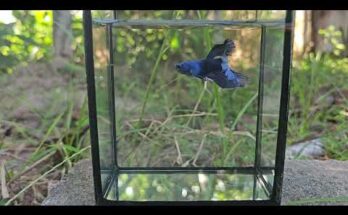
The life of a wild betta couple is a beautiful and natural cycle that shows how these fascinating fish behave in their untouched habitats. Unlike their colorful domestic relatives, wild bettas live in calm, shallow waters such as rice fields, ponds, forest streams, and swampy areas throughout Southeast Asia. Their daily life revolves around survival, territory, bonding, and reproduction.
A wild betta pair begins their relationship through a delicate balance of courtship and instinct. The male is usually territorial, choosing a safe, quiet area filled with leaf litter and floating plants. This environment protects them from predators and provides hiding spaces. The female stays close but avoids entering the male’s territory unless she senses he is ready to mate.
When conditions are right—warm water, calm environment, and plenty of cover—the male begins building a bubble nest under a leaf or floating plant. This structure becomes the heart of their family life. Once the nest is ready, the male displays his colors and dances around the female, inviting her to join him. Their embrace during spawning is gentle and instinctive, with the male wrapping around the female to release eggs. He carefully collects each egg and places it in the bubble nest.
After spawning, the roles become clear. The male becomes the sole guardian, watching the eggs and repairing the nest. The female quietly leaves the area, allowing the male to protect their future offspring without distraction. In the wild, this behavior increases the survival rate of the fry, as the father defends them from predators and keeps the nest oxygenated.
The life of a wild betta couple is not just a moment of breeding—it is a natural partnership shaped by instinct, environmental challenges, and the rhythm of nature. Their bond reflects the beauty of life in the wild, where every movement has purpose and meaning.