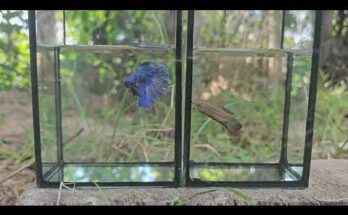
Wild Bettas, known scientifically as Betta splendens and related species, live completely different lives from the brightly colored, long-finned Bettas commonly seen in aquariums. In the wild, these fish inhabit the shallow waters of Southeast Asia—primarily Thailand, Cambodia, Laos, Vietnam, and Malaysia. Their natural environment shapes their behavior, appearance, and survival skills. Understanding the life of wild Bettas gives us a deeper appreciation for how these remarkable fish evolved.
Wild Bettas are found in rice paddies, swamps, marshes, ponds, and slow-moving streams. These areas often contain muddy bottoms, dense plants, and low oxygen levels. Many of these waters can become shallow during the dry season and flood during rainy months. Because of these challenging conditions, wild Bettas developed a unique adaptation called the labyrinth organ, which allows them to breathe air directly from the surface. This ability helps them survive in environments where most fish cannot.
Compared to domesticated Bettas, wild Bettas look very different. Their natural colors are typically more muted—brown, green, dull red, or dark blue—with short fins that allow them to swim quickly through thick vegetation. These natural colors help them blend into their surroundings and avoid predators such as birds, larger fish, frogs, and snakes. While they may not be as flashy as aquarium Bettas, their bodies are built perfectly for survival.
In the wild, Bettas have a territorial lifestyle. Males defend small areas of shallow water rich in plants, insects, and shelter. They use their flaring display—spreading fins and gill covers—to warn other males to stay away. Physical fights do happen, but they are usually shorter and less intense than what many people imagine. The goal is not to kill the opponent but to protect space and food.
Wild Bettas are surface predators. Their diet includes mosquito larvae, insects that fall into the water, worms, and small crustaceans. They rely on stealth and quick movements to capture prey. This natural diet keeps them athletic and alert.
Breeding in the wild is an important part of their life cycle. During the rainy season, when water is clean and plentiful, male Bettas build bubble nests among plants or under floating leaves. The male attracts a female to spawn under the nest. After the eggs are fertilized, he carefully collects them and places them into the bubbles. The female leaves soon after, and the male guards the nest until the fry hatch.
However, life in the wild is full of dangers. Water pollution, habitat destruction, pesticides, and climate changes threaten wild Betta populations. Rice fields—their main habitat—are often treated with chemicals that harm fish. Deforestation also removes the shaded, plant-filled areas Bettas depend on. Because of this, several species of wild Bettas are now considered endangered.
Despite these challenges, wild Bettas remain remarkable survivors. Their ability to adapt, breathe air, defend territory, and thrive in difficult environments highlights the intelligence and resilience of this species. Understanding their natural life helps us appreciate the true origins of the beautiful Bettas kept in aquariums today.